

Have you ever wondered how unique your birthday really is? New research analyzing millions of birth records across different countries has revealed a surprising pattern: some birthdays are incredibly common, while others are extremely rare. The findings are now sparking curiosity worldwide, as people discover whether they share their special day with millions — or just a few.
The Most Common Birthdays
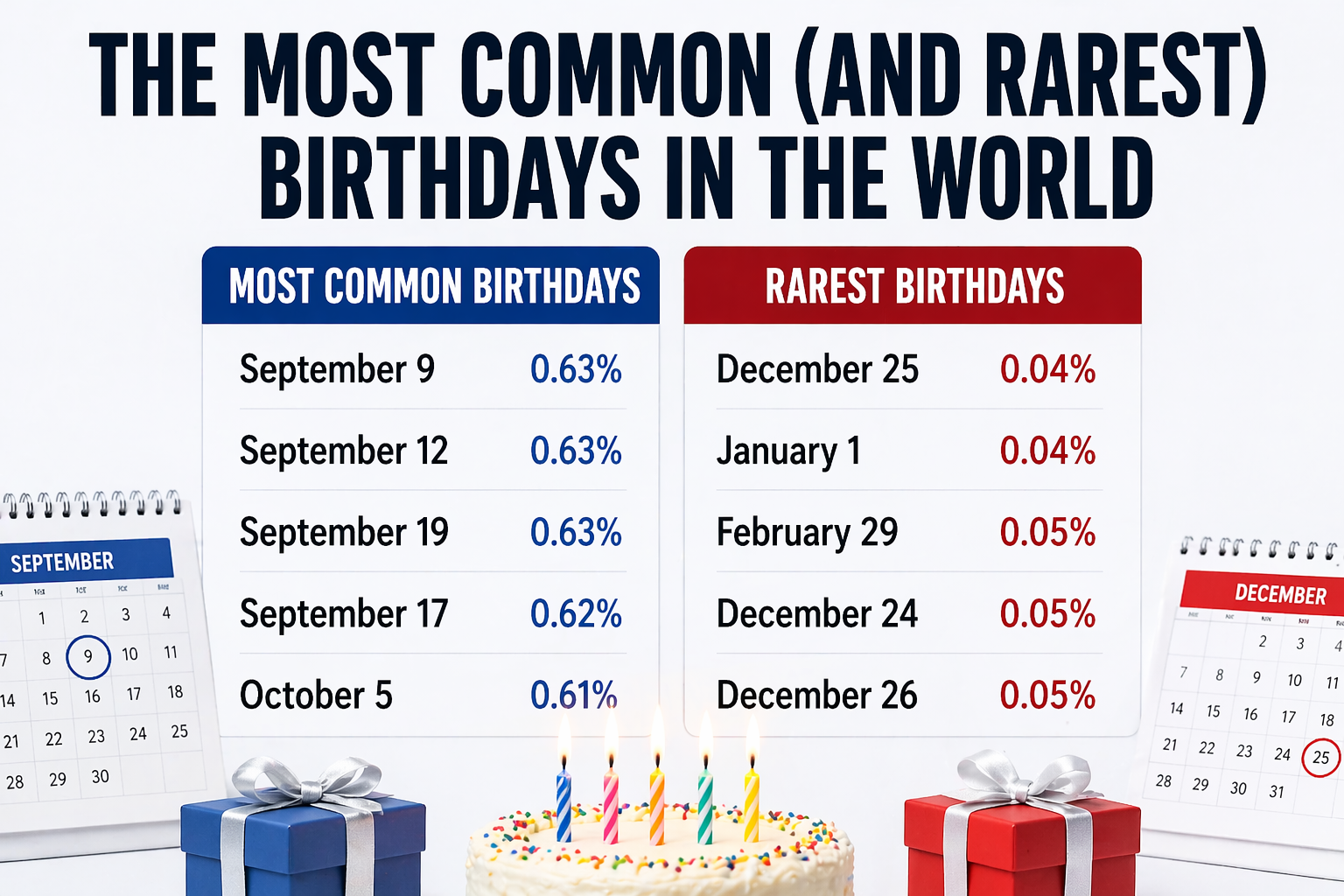
According to large-scale demographic studies, birthdays in mid-September dominate the global charts. Dates like September 9, September 12, and September 19 consistently rank among the most common birthdays in the world.
Experts believe this trend is closely tied to human behavior. These dates suggest that many conceptions happen during the holiday season in December, when people are more relaxed, spending time with loved ones, and often away from work-related stress. The result? A noticeable spike in births exactly nine months later.
In addition, modern planning and scheduled births — such as inductions and cesarean deliveries — also contribute to clustering around certain weekdays. Hospitals often avoid weekends and major holidays, which shifts more births toward specific dates.
The Rarest Birthdays
On the other end of the spectrum, some birthdays are surprisingly uncommon. December 25 (Christmas Day) and January 1 (New Year’s Day) are among the rarest. While these dates might seem special, they often see fewer births due to medical scheduling practices and cultural preferences.
Another particularly rare date is February 29, which only occurs during leap years. This makes “leap day babies” some of the rarest individuals in terms of birthdate frequency.
Studies also show that certain late December dates — such as December 24 and December 26 — tend to have lower birth rates, reinforcing the idea that both medical and social factors influence when babies are born.
Why These Patterns Matter
At first glance, birthday trends may seem like trivial information. However, researchers say these patterns provide deeper insight into human behavior, healthcare systems, and cultural habits.
For example, the concentration of births in September highlights how seasonal behavior can influence long-term population trends. Meanwhile, the drop in births during major holidays reflects how medical systems operate and prioritize scheduling.
There are also subtle psychological factors at play. Some parents may prefer to avoid having their child born on a major holiday, while others may aim for specific dates they consider lucky or meaningful.
A Global Curiosity
While the general pattern is consistent worldwide, there are slight variations depending on region. Countries with different cultural calendars or healthcare practices may see shifts in their most and least common birthdays.
Despite these differences, one thing remains clear: your birthday might not be as random as you think.
So, How Unique Is Your Birthday?
If your birthday falls in September, chances are you share it with a large number of people. But if you were born on a holiday or a rare date like February 29, your birthday is statistically far less common.
In the end, whether your birthday is shared by millions or just a few, it remains uniquely yours. But now, thanks to research, you know exactly where it stands in the global pattern.