

In a strategic milestone for the Middle East, Saudi Arabia has activated its first Terminal High Altitude Area Defense (THAAD) missile system, developed in the United States by Lockheed Martin. This marks the first operational THAAD deployment in the Kingdom, following successful on-site testing and training of Saudi military personnel.
According to the official Saudi Press Agency (SPA), a formal ceremony took place at the Air Defense Forces Institute in Jeddah. The event was led by Commander of the Royal Saudi Air Defense Forces, General Mazid bin Suleiman al-Amr, who officially handed over the unit’s flag to the commander of the THAAD-operating team.
The THAAD system is designed to intercept and destroy short- and medium-range ballistic missiles at high altitudes before they can strike populated areas or critical infrastructure. Unlike conventional interceptors, THAAD uses a hit-to-kill approach, colliding with the incoming missile in the upper atmosphere.
This advanced system is part of a broader U.S.-Saudi defense agreement aiming to modernize the Kingdom’s air defense network. With this installation, Saudi Arabia significantly boosts its readiness against regional threats, positioning itself as a technologically advanced military power in the Gulf.
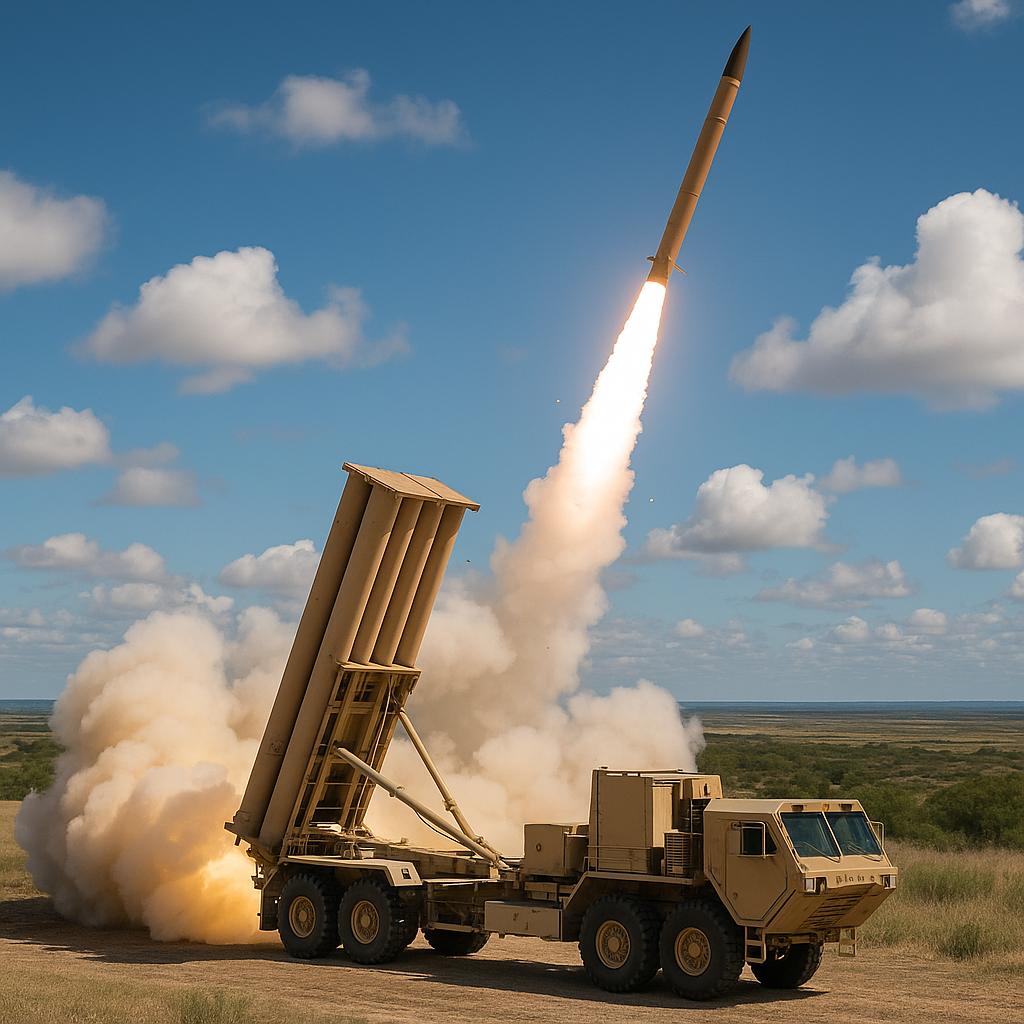
The deployment of the THAAD missile system in Saudi Arabia carries weight beyond its military capabilities. It is a political statement of trust and alliance between Riyadh and Washington, reflecting shifting dynamics in Middle Eastern geopolitics. As tensions rise across the region, especially with Iran, this high-tech shield provides Saudi Arabia with not only defense but also strategic leverage. It’s a strong signal to adversaries and allies alike that the Kingdom is no longer reliant solely on traditional deterrents but is actively embracing next-generation defense technologies.
📸 Illustrated image – created by Novaflash.info for visual purposes. Does not depict a real scene.