
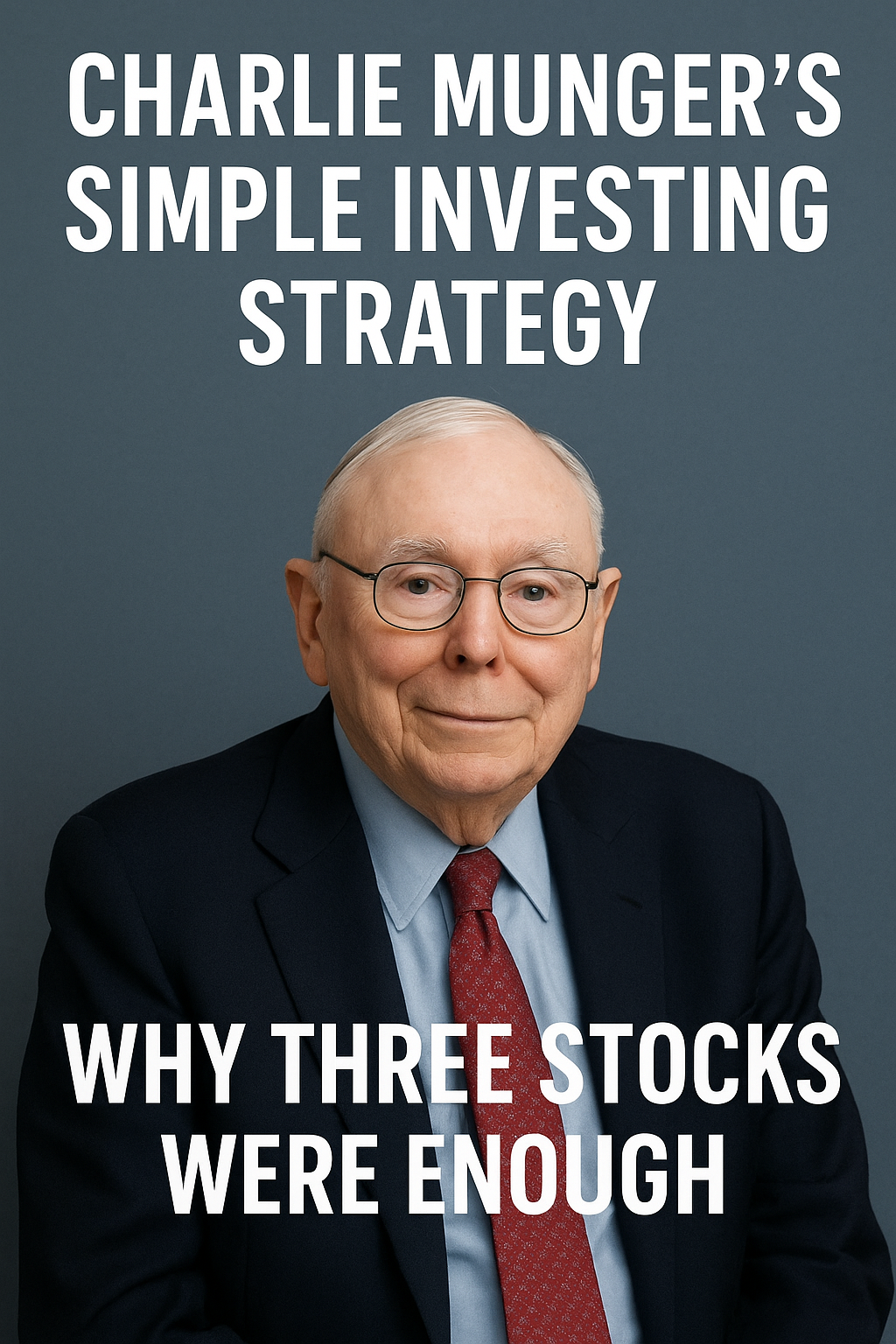

When most people think of legendary investor Warren Buffett, they picture the Oracle of Omaha picking winning stocks like apples at a grocery store. But behind Buffett’s famous investing acumen was his right-hand man, Charlie Munger, vice chairman of Berkshire Hathaway, whose approach to investing was strikingly simple and focused.
Munger, who passed away in 2023 at the age of 99, was known for his razor-sharp intellect, wit, and willingness to challenge conventional wisdom. While many investors chase the next hot stock, diversify endlessly, and get lost in a sea of mutual funds and ETFs, Munger preferred concentration over complexity.
A Portfolio of Just Three Stocks
In a 2017 speech at the Daily Journal Corp. annual meeting, Munger revealed the simplicity of his personal investment strategy.
“The Mungers have three stocks. We have a block of Berkshire, we have a block of Costco, we have a block of Li Lu’s Fund, and the rest is dribs and drabs,” he said.
“So am I comfortable? Am I securely rich? You’re damn right I am.”
Three major holdings—that’s it. For most investors, this might sound reckless. Conventional financial wisdom preaches diversification as the key to reducing risk. But Munger saw diversification differently: as a safety net for people who don’t fully understand what they are buying.
The Diversification Debate
Munger famously criticized the common mantra of diversification:
“Diversification is a rule for those who don’t know anything. Warren calls them ‘know-nothing investors.’”
In Munger’s view, if you truly understand your investments and the companies you own, there is no need to dilute your returns across dozens of stocks. Knowing your investments intimately allows you to focus on quality over quantity.
He often questioned the logic behind blindly following conventional advice:
“To think we’re paying these professors to teach this crap to our young… where it’s right, it’s an idiot decision, and where it’s wrong, you shouldn’t be teaching what’s wrong.”
Munger’s words highlight a fundamental tension in investing: education versus practice. While academics and advisors often promote broad diversification, Munger emphasized that real investing is about understanding the businesses you invest in, not merely spreading your money across a portfolio for safety.
Why Three Stocks Are Enough
Munger’s approach relied on deep knowledge and confidence in his holdings.
“What are the chances that Costco’s going to fail? What are the chances that Berkshire Hathaway’s going to fail? What are the chances that Li Lu’s portfolio in China is going to fail?”
For him, the probability of all three failing simultaneously was so low that additional diversification was unnecessary. By focusing on what he knew well, Munger avoided unnecessary risk while maximizing returns.
“If you’re not a know-nothing investor, if you’re actually capable of figuring out something that will work better, you’re just hurting yourself looking for 50 when three will suffice. Hell, one will suffice if you do it right.”
This philosophy is sometimes called “focused investing.” Instead of chasing the next trendy stock or spreading capital thin, Munger invested in a few high-quality opportunities he understood deeply. The result? Confidence, simplicity, and sustained long-term growth.
Simplicity as a Strategic Advantage
Munger’s strategy also extended beyond mere stock picking. He believed in avoiding unnecessary complexity in all aspects of life and business. By stripping investing down to what he knew best, he minimized errors, avoided emotional decision-making, and sidestepped the traps of over-analysis.
Even late into his life, Munger continued to champion simplicity. He called out financial fluff, mocked pretentious academic theories, and encouraged investors to focus on what truly matters. In a world where many get lost chasing trends, Munger’s approach stands as a reminder that less can be more.
The Lessons for Modern Investors
Charlie Munger’s philosophy offers several timeless lessons:
- Quality Over Quantity: Focus on investments you understand deeply rather than spreading your money too thin.
- Confidence Through Knowledge: Deep research and understanding create confidence, reducing the perceived need for extensive diversification.
- Avoid Complexity: Complicated strategies often introduce unnecessary risk and confusion. Simplicity is a strategic advantage.
- Question Conventional Wisdom: Just because something is widely taught doesn’t make it the right approach for everyone.
- Patience and Discipline: Munger held investments long-term, allowing compounding to work in his favor.
Legacy Beyond Stocks
While Munger was a master of investing, his wisdom transcends finance. He was known for his humor, sharp intellect, and ability to communicate complex ideas in simple terms. By focusing on what he knew and ignoring distractions, he became an enduring figure in the world of business and investing.
Even today, investors who study Munger’s methods are reminded that sometimes the best strategy is to keep it simple. Understanding your investments, avoiding unnecessary noise, and concentrating on what you know best can often outperform overly complicated approaches.
Conclusion
Charlie Munger’s investment strategy was remarkably simple yet profoundly effective. With just three key holdings, he demonstrated that deep knowledge, confidence, and focus often outweigh blind diversification. His life and teachings continue to inspire investors to prioritize understanding, simplicity, and long-term thinking.
In a world obsessed with constant portfolio tweaking and the latest market trends, Munger’s philosophy serves as a timeless reminder: invest in what you know, avoid unnecessary complexity, and let patience and discipline guide your path.