

This weekend, London’s iconic Exhibition Road will be closed to traffic and transformed into a vibrant celebration of science and art as part of the Great Exhibition Road Festival. Some of South Kensington’s most prestigious institutions and museums, including Imperial College London, are hosting free public events filled with curious and creative experiences.
One of the festival’s most intriguing sessions will feature a debate between three researchers from Imperial College London who will try to answer a deceptively simple question:
What is the weirdest thing in the universe?
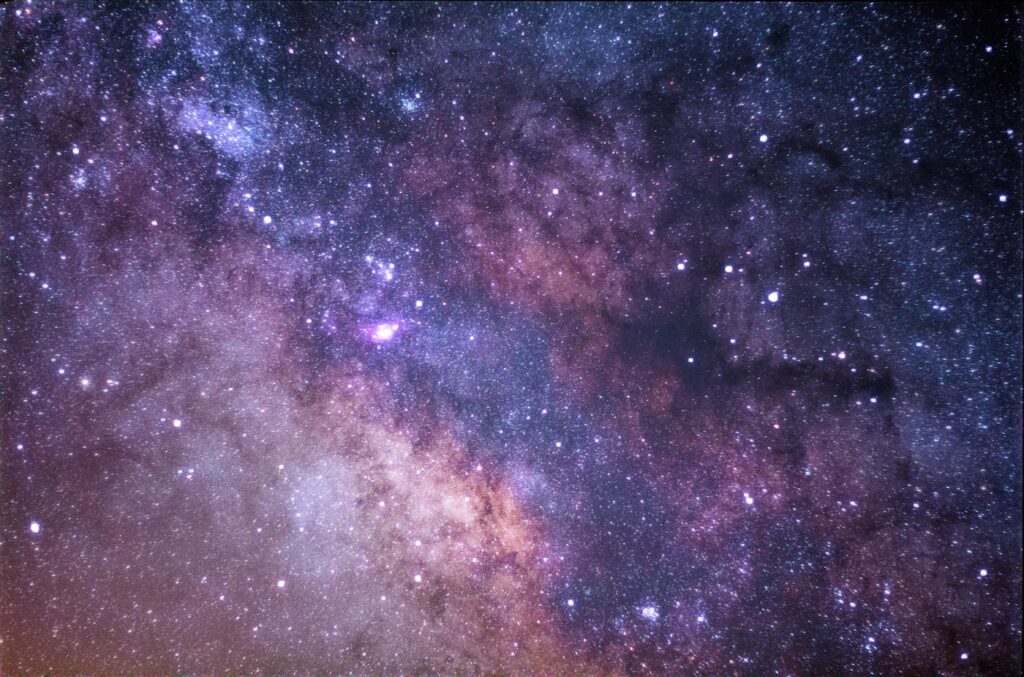
1. Black Holes – Gravity’s Greatest Mystery
For research fellow Mariana Carrillo Gonzalez, the answer lies far beyond Earth – in black holes.
“These are regions of space where matter collapses in on itself, creating gravity so strong that not even light can escape,” she explains.
While scientists can observe the effects of black holes on surrounding space and light, Mariana emphasizes the mystery at their core.
“We still have no idea how they really work. We can’t observe what’s inside because nothing escapes them,” she says.
“To me, that’s just incredibly weird.”
2. Quantum Physics – Where Reality Breaks Its Own Rules
Meanwhile, Rita Ahmadi, a postdoctoral researcher, argues that nothing beats quantum physics in strangeness.
“At the subatomic level, particles behave in ways that break all the classical rules we’re used to,” she says.
Particles can exist in two states at once (a phenomenon called superposition), and even observing them changes their state.
“We know the math works. Quantum mechanics is accurate and useful. But it still doesn’t make sense intuitively,” Rita adds.
She works on building quantum computers—a cutting-edge technology—despite the field being full of unsolved mysteries.
3. Human Consciousness – The Puzzle Within Ourselves
The third contender, Fernando Ernesto Rosas De Andraca, brings the focus inward: human consciousness.
“It’s strange because we believe consciousness is produced by the brain, but individual neurons aren’t conscious,” he says.
“So how can combining unconscious parts suddenly create awareness?”
He also points out the paradox that consciousness is the only thing we can’t doubt, yet no one else can see or measure it.
Fernando further touches on artificial intelligence, which he finds fascinating.
“Most agree that current AI is not conscious. But is there any fundamental reason why it could never be? And if one day it is, could it suffer?”
Science for Everyone
This debate is part of the festival’s mission to make science and art engaging and accessible to all ages—through interactive events like insect yoga, quantum discos, and hands-on robotics.
“We’re always looking for fresh ways to present what we study at Imperial,” says James Romero, a festival organizer.
“This time, we’re challenging scientists to step out of the traditional lecture style and engage in a friendly competition.”
The public will decide the winner after all three have presented their cases during the live event, which takes place at 3:30 PM (BST) this Saturday in the Sir Alexander Fleming Building at Imperial College London.
Are the researchers ready to compete? “I came from Oxford,” says Rita. “I take debates very seriously.”
reported by BBC