
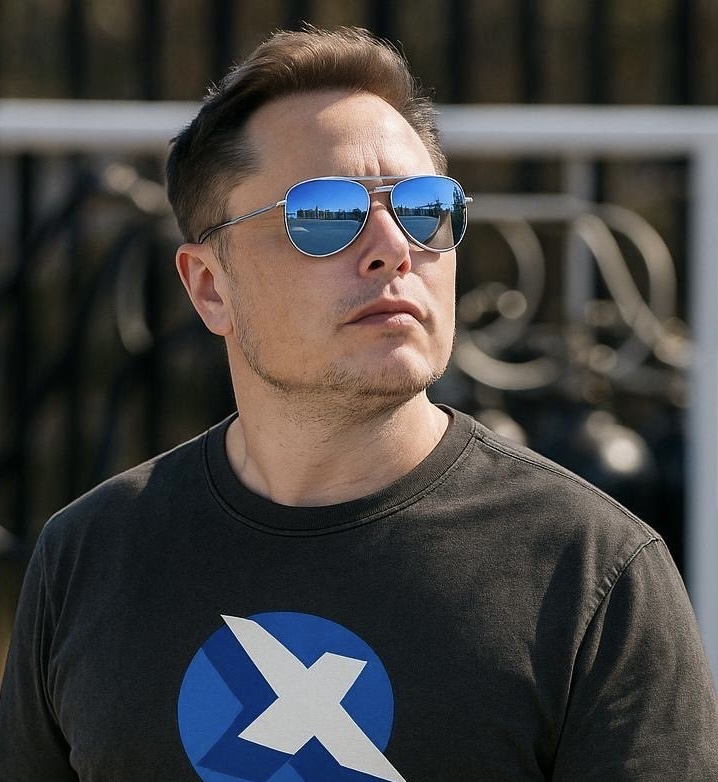

Elon Musk, the world’s richest man and one of the most influential voices in business and technology, has officially announced the launch of his own political party in the United States. Named the “America Party,” the initiative comes just one day after Musk ran a public poll on his social platform X, asking his followers whether he should form a new party to reshape the political landscape.
“With a 2-to-1 margin, you want a new party — and you should have one,” Musk wrote. “Today, the America Party is formed to return your freedom.”
According to Musk, the newly founded party will not only serve as an alternative to the status quo but aims to challenge both Republicans and Democrats alike, calling them “two wings of the same broken system.”
The announcement followed a key political event: U.S. President Donald Trump signed a controversial new tax-cut bill into law on Friday. The legislation, which passed narrowly in both chambers of Congress, was fiercely opposed by Musk, who warned earlier this week that he would fund challengers to any member of Congress who supported the bill. He went further, stating that if the bill passed, he would start a new political movement — a promise now fulfilled.
The bill passed the House of Representatives with 218 votes in favor and 214 against, with only two Republicans siding with Democrats to oppose it. In the Senate, a 50-50 tie was broken by Vice President JD Vance, who cast the deciding vote in favor of the bill. Musk’s reaction was immediate and severe, accusing lawmakers of selling out the country’s financial future.
Musk’s relationship with Trump has long been a complex one. Though he financially supported Trump’s re-election campaign with hundreds of millions of dollars and even briefly led the newly formed Department of Government Efficiency (DOGE) under Trump’s administration, their political alliance soured over major policy disagreements.
Now, with the formation of the America Party, Musk appears to be positioning himself as a disruptive force in U.S. politics — capable of attracting independents, libertarians, and disillusioned voters from both major parties.
According to an early analysis by The Guardian, Musk’s new party may already be eyeing key Senate and House races in swing districts, hoping to build momentum ahead of the 2026 midterm elections.

Elon Musk’s move into formal politics marks a potentially seismic shift in American governance. While third parties have historically struggled in the U.S. due to the two-party system’s institutional dominance, Musk brings with him an extraordinary combination of financial power, media influence, and technological reach.
The formation of the America Party is not merely symbolic — it is a strategic escalation. Musk is seeking to reshape political discourse and pull voters away from what he sees as an entrenched and dysfunctional establishment.
However, despite the bold ambition, the road ahead will be difficult. Structural barriers, such as ballot access laws, debate restrictions, and media bias, pose significant challenges. Yet, in a time of political polarization and voter disillusionment, Musk’s message may resonate more than expected.
If he can translate his popularity into electoral infrastructure and grassroots energy, the America Party may become more than just a protest movement — it could be a major political force.