

U.S. President Donald Trump has announced a 30% tariff on imports from the European Union and Mexico, to take effect on August 1st unless new trade deals are reached before then. The move has triggered swift and strong reactions from both Brussels and Mexico City.
Mexico criticized the decision as an “unfair agreement,” declaring its sovereignty non-negotiable. EU Commission President Ursula von der Leyen warned that the bloc is ready to take “proportional countermeasures” if the tariffs are enforced.
In a letter sent to EU officials, Trump wrote:
“We’ve had years to discuss our trade relationship with the EU and have concluded that the large, persistent trade deficit must end. It poses a threat to U.S. national security.”
During a Fox News interview, Trump stated that the tariffs would bring “hundreds of billions of dollars” into the U.S. economy and said some countries are “very nervous” about the consequences.
In addition to the EU and Mexico, Trump also announced similar tariffs for imports from Japan, South Korea, Brazil, Canada, Serbia, Bosnia-Herzegovina, and Kosovo. Kosovo has already been under a 10% tariff since April.
Kosovo’s President Vjosa Osmani said that her office has prepared a bill to remove tariffs on U.S. imports, but the law cannot be passed until the new Parliament is constituted—something that remains stalled after dozens of failed attempts.
European leaders are divided in their response. French President Emmanuel Macron strongly opposed Trump’s plan and urged for firm countermeasures. Italian Prime Minister Giorgia Meloni, however, expressed optimism, calling for a “fair deal” and warning against a full-blown trade war across the Atlantic.
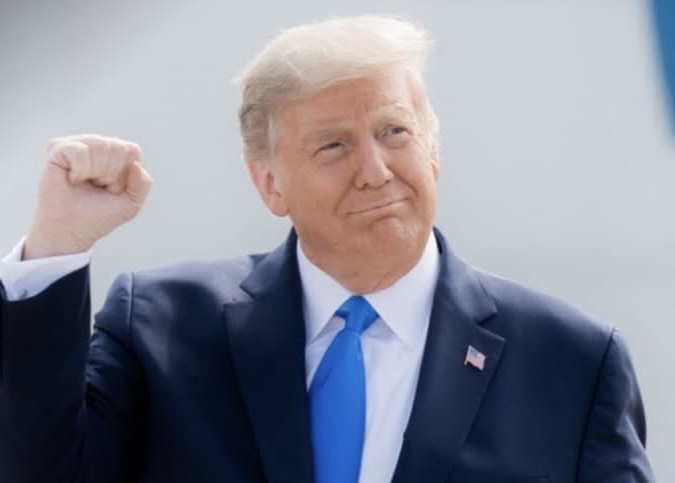
Trump’s aggressive tariff strategy reflects his commitment to “America First” policies, but risks escalating into a global trade conflict. While the approach may bring short-term revenue, it could destabilize long-standing alliances and disrupt global supply chains. For Kosovo, still recovering economically, these tariffs could deepen dependency and delay development—especially amid ongoing political deadlock.
Trump’s aggressive tariff strategy reflects his commitment to “America First” policies, but risks escalating into a global trade conflict. While the approach may bring short-term revenue, it could destabilize long-standing alliances and disrupt global supply chains. For Kosovo, still recovering economically, these tariffs could deepen dependency and delay development—especially amid ongoing political deadlock.