
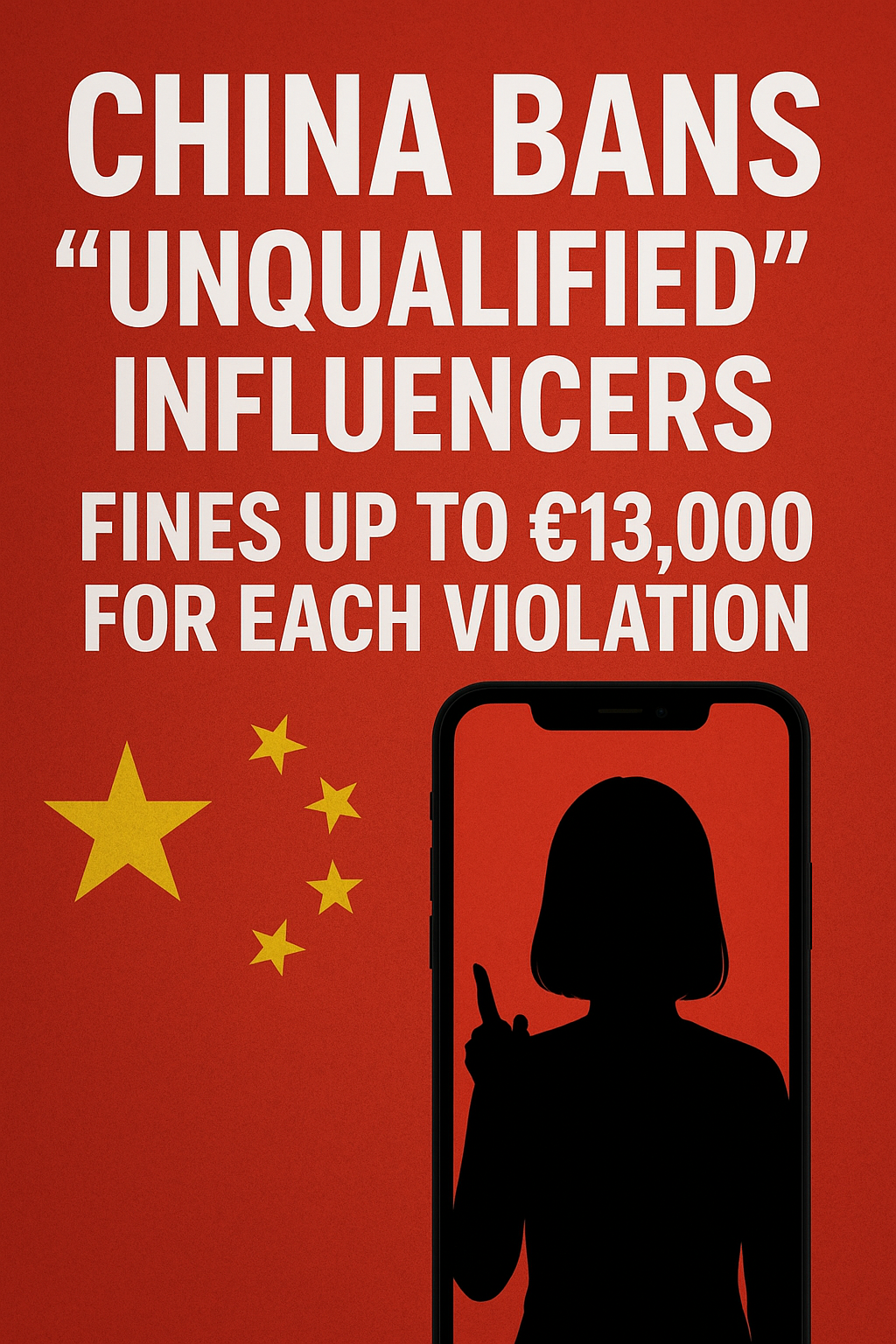

China has rolled out a sweeping new regulation targeting social media influencers and content creators, prohibiting those without formal education or credentials from discussing professional subjects online.
According to international media reports, anyone speaking on topics such as medicine, law, finance, education, or healthcare must now provide proof of their qualifications. Failure to do so could result in fines reaching 100,000 yuan (approximately €13,000) and even permanent account suspension.
Major platforms like Douyin (China’s version of TikTok) and Weibo are now legally required to verify users’ credentials before they publish content on these subjects. The government says the measure is designed to combat misinformation and improve content quality, ensuring that users receive accurate and trustworthy information.
However, the decision has sparked a heated debate across the country. Critics argue it could be another form of state control over free speech, silencing independent voices that question authority or share alternative perspectives. Others, however, view it as a necessary step to protect the public from scams, false claims, and unverified health advice that have become rampant online.
China’s digital landscape continues to evolve rapidly, and this move reflects a growing trend of tightening oversight on online behavior and speech — a reminder that the boundary between public influence and state control remains as thin as ever.