
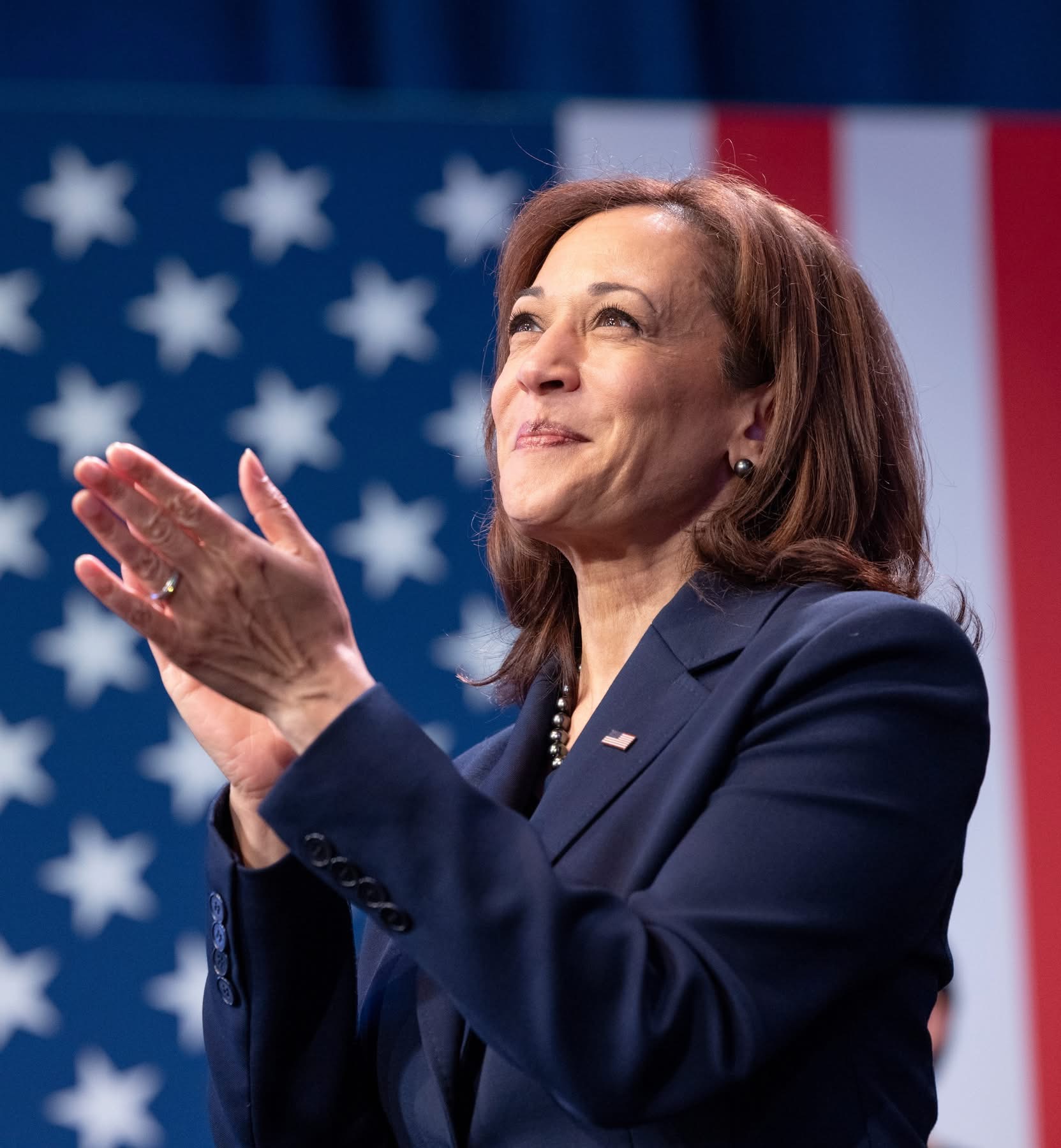

Former Vice President Kamala Harris shared her candid impressions of former President Donald Trump during his debate with then-President Joe Biden, describing the experience as both unusual and “fascinating.” Harris discussed her observations in a recent interview, reflecting on the dynamics of the debate and the political strategies employed by both leaders.
Harris explained that while she watched the debate from Los Angeles, she noticed the Democratic side seemed to act as though everything was “fine,” despite Trump’s unpredictable debate style. She noted that Trump’s ability to quickly seize on any perceived weakness in his opponent’s articulation made the debate particularly challenging.
“It was fascinating to watch,” Harris said. “It’s a very rare circumstance that you see Donald Trump actually moderate. Because of course, I watched that debate very closely for many, many reasons, including interviews I had to do afterward to speak on behalf of the president during the debate.”
During the interview, Harris revealed she had been in LA at the Fairmont Hotel with a small group of colleagues, taking careful notes while observing the debate. She even humorously mentioned ordering pizza for her team while monitoring the debate.
She described her concern that Trump might not have fully wanted to participate in the debate, saying, “I just, I don’t think he wanted to debate, is my point. He didn’t want that debate.”
Harris also analyzed Trump’s debate tactics, noting his use of labels and his ability to “gaslight” opponents, calling him “very gifted” in these strategies. She emphasized that countering such tactics requires relentless focus on the facts and careful deconstruction of the opponent’s messaging.
The former Vice President’s remarks offer a behind-the-scenes look at the debate from the perspective of a senior political figure, highlighting both Trump’s debate strengths and the strategic challenges faced by those on the opposing side.
Harris’s reflections also provide insight into the broader political landscape and the ways in which debate performance can influence public perception. Her candid account sheds light on the meticulous preparation, analysis, and strategic thinking that go into high-stakes political debates.
This interview marks another instance where Harris has spoken openly about her experiences and perspectives on leadership, strategy, and political engagement. Observers have noted that her comments underscore the complexity of modern political communication and the unique challenges posed by unconventional opponents like Trump.
For those interested in American politics, Kamala Harris’s insights offer a valuable glimpse into the interplay of personality, strategy, and media in shaping public understanding during major political events.