
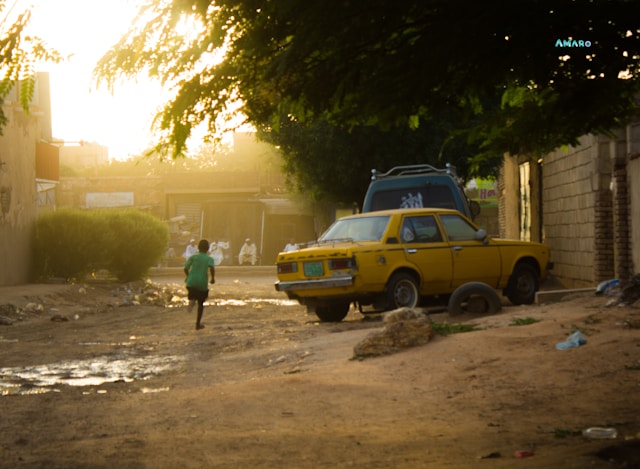

In 1967, the city of Khartoum stood as a symbol of Arab resistance. Sudan joined as the second Arab nation to host an Arab League summit, where leaders declared the iconic “Three No’s”: No Peace with the Zionist occupation, No Recognition of the Zionist entity, No Negotiations with that colonial regime. This declaration was a rallying cry in the era.
Fast‑forward nearly six decades, and that legacy appears shattered. The United Arab Emirates (UAE) — once an ally under the broader Arab posture of rejection — normalized relations with Israel under the “Abraham Accords,” betraying the symbolic stand Sudan and others once held.
Today, Sudan is again bleeding — but this time the pain is internal, not external. The war that erupted in April 2023 between the regular army and the powerful paramilitary Rapid Support Forces (RSF) has devastated the country. Millions have been displaced. Hunger, malnutrition, cholera, and mass atrocities plague regions like Darfur and camps such as Zamzam Camp and Tawila. As humanitarian groups warn, the legacy of resistance has given way to a humanitarian catastrophe.
From Symbol to Spectacle
In 1967, Sudan’s position carried weight. Its hosting of the Arab League summit and the “Three No’s” gave Khartoum moral rather than military leadership. By rejecting peace, recognition, and negotiations, Sudan aligned with what was understood as a broad Arab front. Over time, however, the region’s geopolitics shifted. The UAE and others changed course. Sudan’s own role pivoted, and by 2025, the country found itself in a far more desperate position.
Darfur and the Humanitarian Collapse
Darfur, once the scene of global outrage after earlier genocide accusations, is again the epicentre of horror. Camps like Zamzam and towns like Tawila host hundreds of thousands of displaced persons fleeing violence, siege, and starvation. In December 2024, screening in Tawila found global acute malnutrition (GAM) rates of 35.5% and severe acute malnutrition (SAM) rates of 7% among children under five. UNICEF further reported a 46% rise in children treated for severe acute malnutrition across Darfur between January and May 2025.
These figures are not abstract. Women and children walk through scorching heat, carry infants, and wait for medical attention hours away from aid camps. Some survive by consuming animal feed. War‑wounded patients, including children, arrive daily at overstretched clinics run by Médecins Sans Frontières (MSF) or UN agencies.
Legacy vs. Reality
What once symbolized defiance now reflects despair. The “Three No’s” doctrine may have been politically potent in its time, but today’s Sudan meets neither recognition nor negotiation — instead it faces internal collapse. Some leaders argue that by failing to pivot economically or politically, Sudan is now paying the cost. Others claim foreign involvement and internal misgovernance combined to produce what the UN calls the world’s worst humanitarian crisis.
Why It Matters
Sudan’s fall from moral to mortal crisis has broader implications:
- Humanitarian: Millions rely on aid. The siege of El Fasher and influx to Tawila show how conflict, hunger, and disease converge.
- Geopolitical: The UAE’s shift in alliances, normalization with Israel, and Sudan’s internal collapse point to shifts in Arab world strategy.
- Global: Weak states, civil war, climate stress, and food insecurity risk creating new crisis zones with global knock‑on effects.
The Betrayal Narrative
Some Sudanese and Arab commentators articulate this as betrayal. The rhetoric of the 1967 summit — rejection of colonial occupation — met with today’s tabula of war, foreign alliances, and state collapse reveals a deep sense of abandonment. For many in Darfur and displaced camps, such talk is history: their present is survival.
Aid Efforts Under Strain
Despite the warnings, access remains limited. MSF recently had to suspend operations in Zamzam camp due to heavy fighting. Aid convoys blocked, hospitals overwhelmed, and displacement unchecked.
Conclusion
The symbolism of Khartoum in 1967 cannot mask the tragedy of 2025 Sudan. A proud Arab posture has been replaced by a fractured state amid war, starvation, and mass displacement. The “Three No’s” echo as a ghost slogan. Meanwhile, millions wait for something far louder: help.