
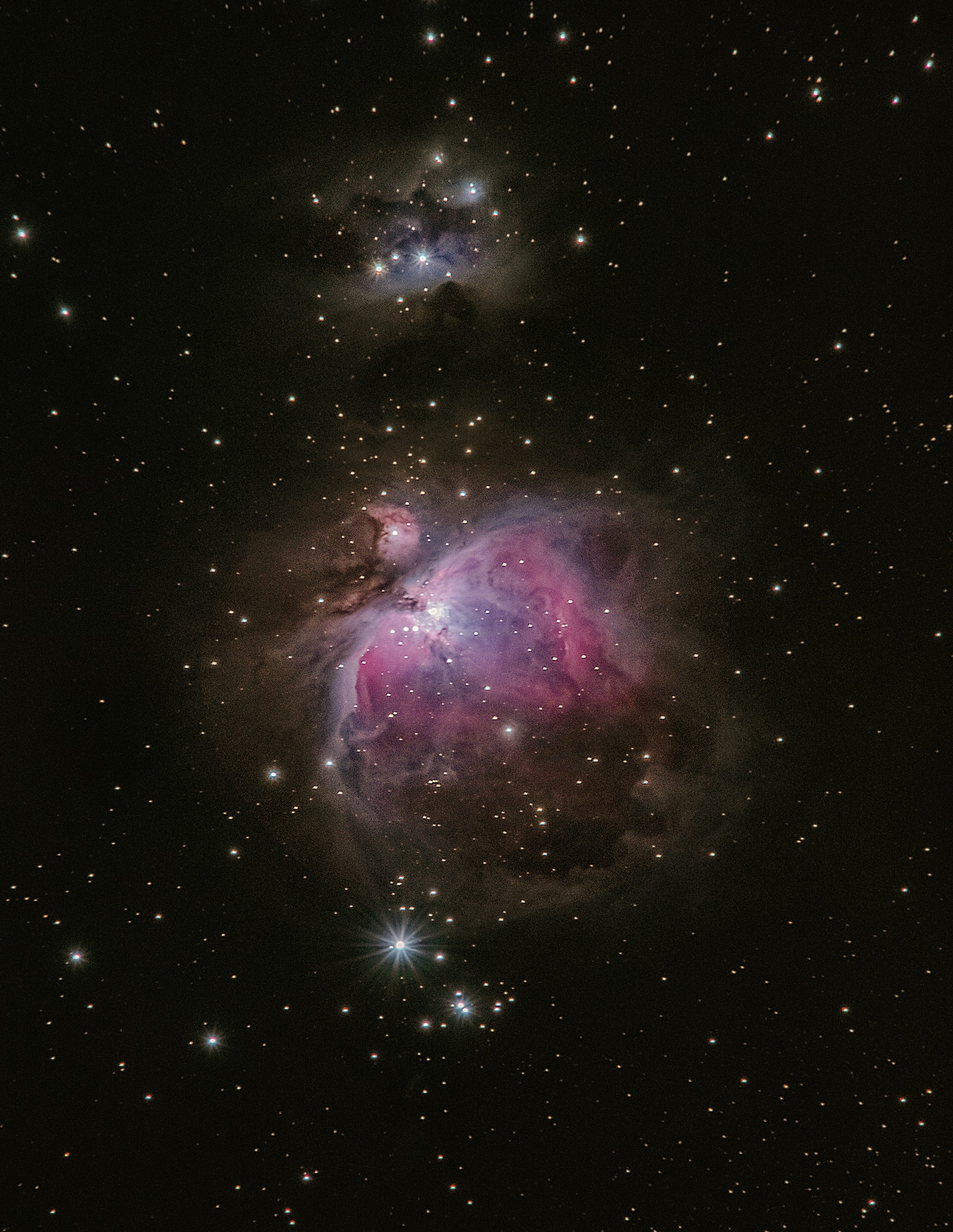

In the beginning, there was nothing. No time, no space, no light, no dark. Just a void beyond human imagination. But nearly 13.8 billion years ago, something extraordinary happened: the Big Bang – the moment everything we know began.
This was not an explosion in space, but rather the sudden appearance of space itself, along with time, energy, and matter. From a point smaller than anything we can conceive, the universe began to expand at an unimaginable speed.
Over millions of years, particles formed atoms, stars, and galaxies. Around 4.5 billion years ago, our solar system came into existence – and much later, so did humanity.
Yet despite all our scientific achievements, the biggest question remains unanswered:
What caused the Big Bang? And why did it happen at all?
Science admits it cannot explain what came before time and space. And so, many eyes turn toward religion – particularly Islam, which presents not only a faith but a framework that aligns with science.
The Qur’an, revealed 1400 years ago, remarkably describes:
“Do not those who disbelieve see that the heavens and the Earth were a joined entity, and We separated them? And We made from water every living thing.” (Qur’an 21:30)
And also:
“We built the universe with power, and indeed, We are expanding it.” (Qur’an 51:47)
Modern cosmology confirms this: the universe is still expanding. These verses – far from vague poetry – contain truths that align with today’s most advanced physics.
Thus, for many, Islam is not in conflict with science but a reflection of it, offering not just how the universe works – but why it exists.

This article highlights how the Islamic worldview bridges science and faith. Rather than contradicting modern discoveries, the Qur’an often precedes them – offering timeless insights into creation, purpose, and existence. For seekers of truth, this harmony is not coincidence, but confirmation.
In this vast realm of uncertainty, many turn to faith for answers.
Among the religious scriptures, it is the Quran, revealed over 1400 years ago, that describes the origin of the universe with remarkable accuracy:
“Do not the disbelievers see that the heavens and the earth were a single entity, then We split them apart? And We made from water every living thing.”
(Quran 21:30)
This single verse captures what science would only discover centuries later: the Big Bang, the separation of matter, and the essential role of water in life.
It also states:
“We built the heaven with power, and indeed, We are [continuously] expanding it.”
(Quran 51:47)
Today, astronomers agree — the universe is not static; it is constantly expanding. So, not only does the Quran mention creation from nothingness, but it also provides details that are now part of scientific consensus.
This has led many modern scholars — including former atheists — to reconsider their beliefs. Because in a universe that began from nothing, governed by perfect order and precision, it becomes hard to believe that no Higher Intelligence lies behind it.
Is God the origin of the Big Bang?
Is the universe part of a divine master plan?
These are questions with no single answer — but for millions across the world, the Islamic faith offers the most coherent and scientifically compatible explanation.