
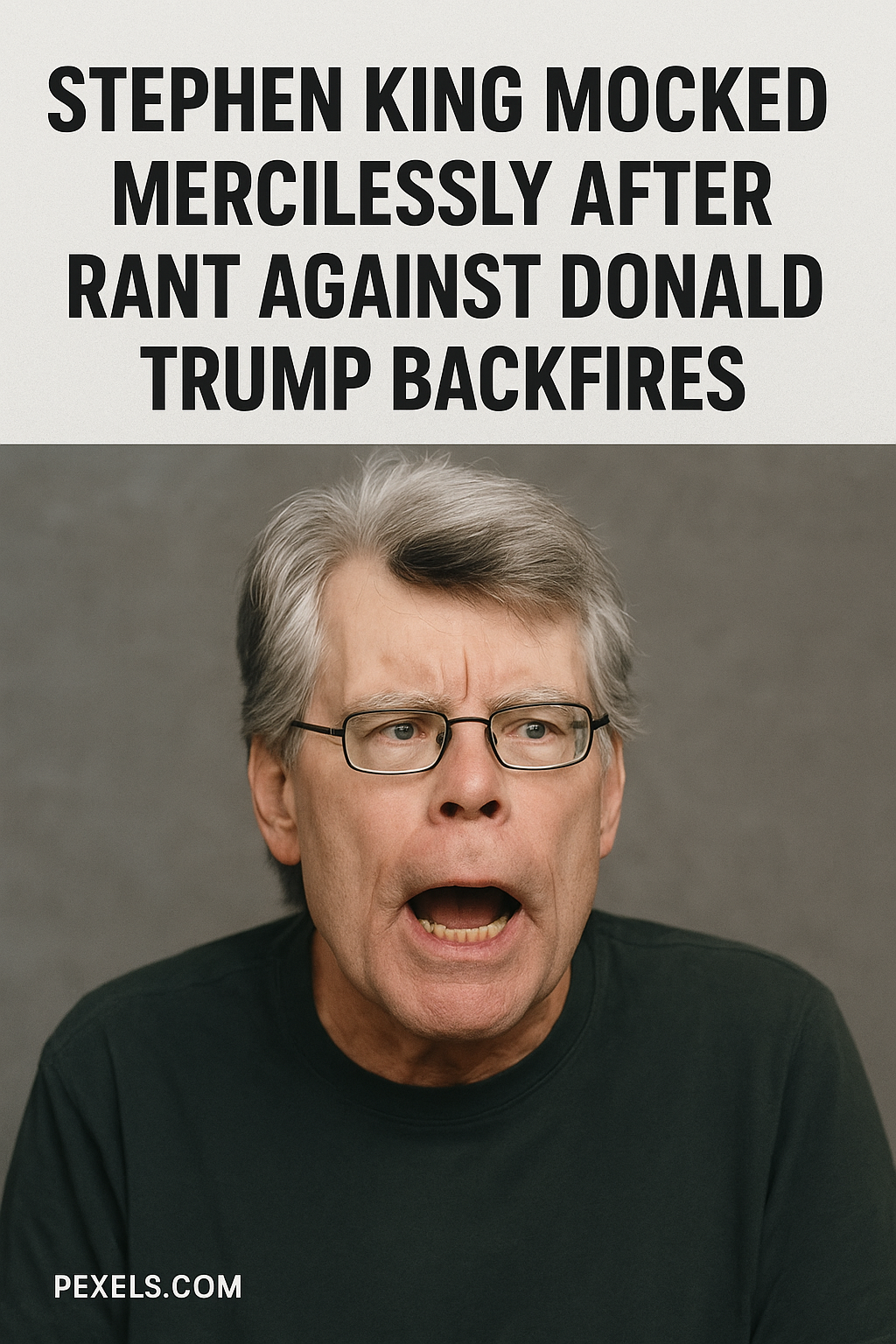

Acclaimed author Stephen King found himself on the receiving end of sharp online ridicule after reacting vehemently to a fake social media post that he believed was from former President Donald Trump. What was meant as a pointed political critique instead unravelled into a cautionary tale about verifying information in the age of viral misinformation.
The Incident
On October 26, 2025, a screenshot circulated on platforms such as X (formerly Twitter) that appeared to show Donald Trump declaring:
“WE WILL BE INVESTIGATING THE UN-AMERICAN BLUE JAYS WHO ARE TRYING TO STEAL OUR BELOVED WORLD SERIES. THEY WILL DEFINITELY NOT BE INVITED TO THE WHITE HOUSE.”
In response, Stephen King posted:
“Trump says he won’t invite either team playing in the World Series to the White House. He can’t rise above his petty political concerns even for the great American game. If anything shows what a louse he is, that’s it.”
Swift Backlash
The reaction was almost immediate. Online users quickly pointed out that the screenshot was a fabricated hoax, not an official post by Trump. Fact-checking organizations flagged it as false and noted no credible source confirmed such a statement from the former president.
King’s misstep became fodder for critics, some of whom mocked him for failing to verify first, while others used the incident to highlight how even high-profile figures can fall victim to misinformation. As one comment read:
“Fiction writer can’t help but share more fiction.”
Context & Consequences
This episode is less about King’s politics and more about the broader challenge of the digital era — the convergence of viral content, misinformation, and the speed at which social media shapes public perception.
• Stephen King is no stranger to controversy on social platforms; he has previously apologized for sharing inaccurate statements.
• The fake post in question referenced the Toronto Blue Jays-Los Angeles Dodgers World Series, playing into national and political boundaries with a provocative message. The fact-check is clear: Trump did not author the post.
• Social media users and observers pointed to the incident as a reminder that even influential voices must maintain vigilance over factual accuracy and the origins of content they share.
Why This Matters
In an age where political polarization, celebrity influence, and instant communication intersect, this story underscores key dynamics:
- Authority and trust — when a respected author like King reacts strongly, many follow. If the premise is flawed, the fallout is amplified.
- Mis-information transmission — the fake post spread like wildfire before being debunked, demonstrating how viral content can outpace fact checking.
- Public perception and media literacy — audiences are becoming savvier; many pointed out King’s mistake in real time.
- Reputation risk — individuals, no matter how prominent, risk credibility when they respond without verification.
- Celebrity influence in politics — this incident exemplifies how cultural figures wade into political discourse, but also how vulnerable that arena can be.
Looking Ahead
Stephen King has not indicated further comment on the episode, but media analysts suggest it may affect how public figures engage online — potentially prompting more caution.
Meanwhile, the incident contributes to conversations about the responsibility of influencers, the speed of misinformation, and the need for verification even among trusted sources.
As social platforms evolve, so does the nuance in how truth is perceived, distored, and corrected — and this case offers a real-time window into that transformation.