
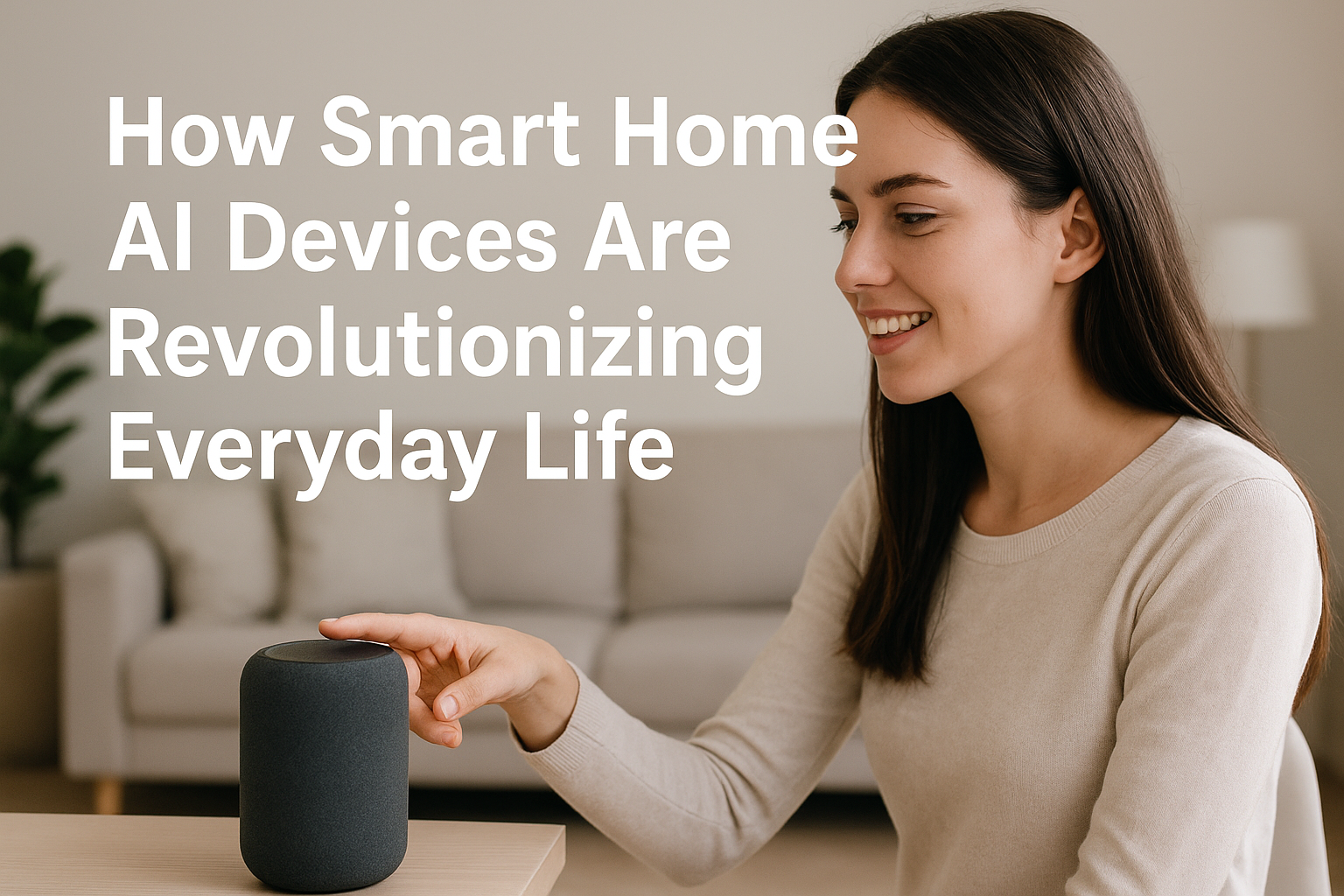

In recent years, smart home AI devices have shifted from being futuristic novelties to everyday essentials. From intelligent lighting and climate control to AI‑powered security cameras, these technologies are transforming the way people live, work, and interact with their homes.
1. The Rise of Smart Home Technology
The global Internet of Things (IoT) market continues to grow exponentially, and smart homes are a major driver. AI‑enabled devices integrate seamlessly into modern households, learning user preferences, automating routines, and even predicting needs.
For example, smart thermostats adjust heating and cooling based on occupancy and weather patterns, reducing energy bills while improving comfort. Similarly, AI lighting systems can automatically dim or brighten rooms depending on the time of day or activity.
2. Security and Safety in AI Homes
One of the most impactful applications of smart home AI is home security. Modern systems combine motion detection, facial recognition, and automated alerts to provide near real‑time protection. AI can even differentiate between residents, pets, and potential intruders, reducing false alarms and improving peace of mind.
For instance, a homeowner could be away on vacation while their AI security system monitors all doors and windows, sends alerts about unusual activity, and even triggers emergency protocols if necessary.
3. Energy Efficiency and Sustainability
Smart home AI devices aren’t just convenient—they are eco‑friendly. Automated energy management systems optimize electricity consumption, monitor energy usage, and reduce waste. According to industry reports, households using AI-driven energy solutions can reduce energy consumption by 15–30 % annually.
Smart appliances like AI refrigerators can suggest shopping lists based on consumption patterns, while AI washers and dryers schedule laundry cycles during off-peak hours, conserving power.
4. Voice Assistants and Automation
Voice assistants, such as Amazon Alexa, Google Assistant, or Apple Siri, serve as the central hub for many smart homes. They allow hands-free control over lights, media, security, and appliances. The AI behind these assistants learns from user behavior, gradually becoming more personalized and intuitive.
Integration with third-party services allows voice assistants to handle calendars, reminders, shopping lists, and even online purchases, making daily routines simpler and more productive.
5. Health and Wellness Monitoring
AI technology in smart homes is also extending into health and wellness. Smart mattresses, AI‑powered lighting, and environmental sensors monitor sleep quality, air quality, and activity levels. This data allows homeowners to make informed decisions to improve health outcomes, from better sleep patterns to enhanced air circulation.
Wearables can sync with smart home systems to automate routines based on personal health data—for example, adjusting lighting to promote circadian rhythm alignment or triggering alarms if a fall is detected.
6. Challenges and Considerations
While the benefits are clear, AI smart homes come with challenges:
- Privacy concerns: AI devices collect massive amounts of personal data. Users must ensure strong encryption and privacy policies.
- Security risks: Connected devices are susceptible to hacking if not properly protected.
- Cost barriers: High initial investment may limit adoption for some households.
- Interoperability: Ensuring devices from different manufacturers work seamlessly is critical for a smooth experience.
7. The Future of Smart Home AI
As AI continues to evolve, smart homes will become more predictive, adaptive, and autonomous. Future devices may anticipate needs before users even express them, optimizing energy, safety, and convenience with minimal input.
For example, AI could manage home energy consumption in real time, respond to traffic patterns, or even adjust indoor environments based on predicted mood or health conditions.
The potential is enormous—not only for improving daily life but also for creating more sustainable, safe, and efficient households worldwide.