
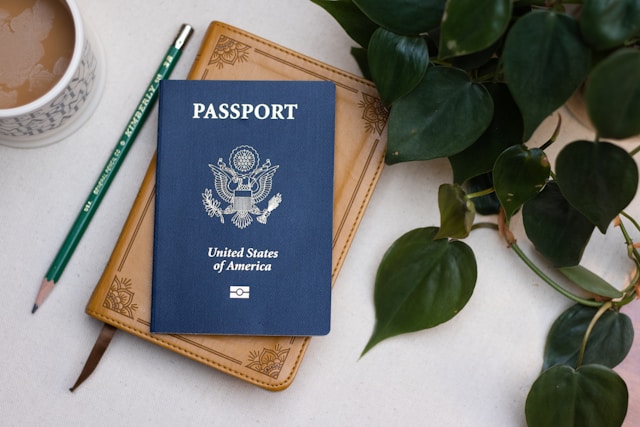

In a groundbreaking yet controversial ruling, the U.S. Supreme Court has officially decided that American passports will only recognize two genders: male and female.
The historic decision, announced on November 6, 2025, marks the end of a long legal and political debate that began years ago over whether government-issued documents should reflect biological sex or self-declared gender identity.
The new policy, which will be implemented by the U.S. Department of State, eliminates the “X” gender marker that was introduced under the Biden administration in 2022 for citizens who identify as non-binary or gender nonconforming.
🔹
What Does the New Rule Mean?
According to the Supreme Court’s ruling, American citizens applying for or renewing a passport will now be required to select “M” for male or “F” for female — with no third option available.
This change overturns the previous regulation that allowed non-binary individuals to mark their gender as “X.”
The Department of State stated that the decision will “ensure uniformity and legal clarity in federal identification documents.”
Supporters of the change have celebrated the move as a return to “biological and legal consistency,” while critics have condemned it as a rollback of civil rights and a direct attack on gender diversity in the United States.
🔹
The Background: How the Gender Debate Began
The issue of gender markers on identification documents has been one of the most divisive cultural topics in the U.S. over the past decade.
Until 2022, American passports included only “M” (male) and “F” (female). But that year, under President Joe Biden’s administration, the government introduced the “X” gender option, becoming one of the first major Western nations to officially recognize non-binary identities in travel documents.
The move was widely praised by LGBTQ+ rights groups, which called it a “historic step toward inclusion.”
However, conservative lawmakers and religious organizations strongly opposed it, arguing that a passport should reflect biological sex, not personal identity.
In 2024, several conservative legal foundations filed lawsuits challenging the State Department’s authority to create the “X” category without congressional approval. The case eventually reached the Supreme Court, setting the stage for the major ruling delivered in November 2025.
🔹
What the Supreme Court Said
In its majority opinion, the Supreme Court stated:
“A passport is a legal document intended to verify citizenship and biological identity, not to represent self-perception. Consistency in official records is essential for legal integrity and international recognition.”
The Court emphasized that the decision does not aim to discriminate but to maintain uniform standards in federal documentation.
According to the ruling, recognizing only two biological sexes aligns with existing laws governing citizenship, security, and international agreements.
Chief Justice John Roberts, in his concurring opinion, added:
“This ruling is not about denying anyone’s identity. It is about ensuring that legal documents remain consistent, verifiable, and secure under federal law.”
🔹
Reactions Across America
The Supreme Court’s decision triggered immediate and polarized reactions across the country.
Civil rights groups, including the American Civil Liberties Union (ACLU) and Human Rights Campaign (HRC), condemned the ruling, calling it a “massive setback for equality.”
Kelley Robinson, president of the HRC, stated:
“This decision erases recognition for thousands of non-binary Americans who simply want to exist and travel safely.”
Meanwhile, conservative figures hailed the ruling as a “victory for truth and law.”
Senator Josh Hawley of Missouri said on X (formerly Twitter):
“This ruling restores sanity to government documents. The law cannot be rewritten to match ideology.”
Governor Sarah Huckabee Sanders of Arkansas praised the decision as “a step toward restoring biological reality in American law.”
🔹
Impact on American Citizens
According to data from the Williams Institute at UCLA, an estimated 1.2 million U.S. adults identify as non-binary.
These individuals will be directly affected by the new ruling, as future passport applications will require them to choose between male or female.
The State Department confirmed that existing passports marked with “X” will remain valid until they expire. However, when renewed, holders must select one of the two binary options.
This change could also affect travel for some citizens, as other countries — including Canada, Germany, Australia, and New Zealand — currently recognize non-binary gender markers in their official documents.
🔹
Could This Ruling Be Overturned?
Legal experts say that while future administrations may attempt to reintroduce the “X” option, the Supreme Court’s decision sets a strong constitutional precedent that will be difficult to reverse without congressional action.
Attorney Lisa Caldwell, a constitutional law scholar, explained:
“This ruling effectively places the question of gender recognition in the hands of Congress. Unless a new law is passed, federal documents must adhere to the binary model.”
That means future presidents may face limitations in using executive authority to expand gender options on official IDs or travel documents.
🔹
Broader Social and Political Implications
Beyond its legal impact, this decision is reshaping the broader American debate over gender identity, science, and civil rights.
Supporters argue that the ruling reflects “biological truth” and restores objectivity in government documentation.
Opponents, however, see it as a symbolic and practical erasure of people who do not fit traditional gender categories.
The ruling also highlights the growing cultural divide between progressive and conservative America, with gender identity now at the forefront of election-year debates.
Political analysts believe the issue could play a significant role in the 2026 midterm elections, as candidates on both sides seek to mobilize their bases around questions of morality, identity, and state power.
🔹
International Reaction
Reactions from abroad have been mixed.
In Europe, human rights organizations criticized the ruling, warning that it could undermine international efforts to promote gender inclusivity.
In contrast, several conservative leaders in Eastern Europe and Latin America applauded the U.S. decision, viewing it as a “return to biological and legal clarity.”
The European Union continues to encourage its member states to recognize non-binary gender categories in official documentation, citing human rights and data accuracy.
🔹
The Human Perspective
Beyond politics and law, this decision has deeply personal implications for those affected.
Non-binary individuals and transgender activists across the country have voiced frustration and sadness, saying they feel their identities are being invalidated.
Morgan Price, a non-binary individual from Oregon, shared:
“I served in the military, I pay my taxes, I’m an American citizen — yet my own country refuses to acknowledge who I am on my passport. That hurts.”
Mental health advocates warn that policies denying gender recognition can lead to higher rates of depression and anxiety among marginalized groups.
🔹
What Happens Next?
The Department of State is expected to begin implementing the new passport regulations by early 2026, with all systems updated by mid-year.
Citizens will be notified via email and official government portals before applying for renewal.
Meanwhile, advocacy groups are preparing new legal challenges, arguing that the ruling violates constitutional protections under the Fourteenth Amendment’s Equal Protection Clause.
Experts predict that while the Supreme Court’s ruling will stand in the short term, the debate over gender identity and federal documentation will continue to evolve for years to come.
🔹
Conclusion
The Supreme Court’s decision to restrict U.S. passports to only male and female gender markers marks a turning point in American legal and cultural history.
It reignites age-old questions about identity, biology, freedom, and law:
Should official documents reflect a person’s biological sex, or their lived gender identity?
While the Court has chosen the former, the conversation is far from over.
This ruling will continue to shape policy discussions, human rights debates, and personal experiences for millions of Americans navigating the intersection of identity and law.