
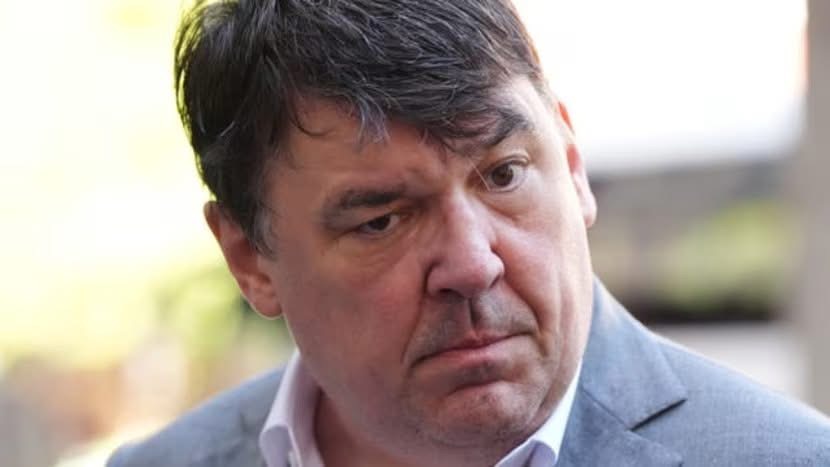

London – In a landmark shift in policing strategy, the Metropolitan Police announced on Monday that it will no longer investigate non-crime hate incidents (NCHIs) — incidents perceived as motivated by hostility or prejudice but which do not meet the threshold of a criminal offence. This move comes in the wake of the force dropping its investigation into Irish writer and comedian Graham Linehan, who was arrested earlier this year at Heathrow Airport on suspicion of inciting violence via social media posts.
What are non-crime hate incidents?
Non-crime hate incidents are defined in UK policing guidance as incidents whereby it is perceived that the victim believes the incident to be motivated by hostility toward a protected characteristic — such as race, religion, gender identity, or sexual orientation — but which do not amount to a punishable offence.
Historically they have been used to gather intelligence, monitor tension, and assess the risk of escalation into criminal hate offences. However, critics have long argued that recording or investigating NCHIs can blur the line between criminal wrongdoing and offensive speech — raising questions about free speech and policing in the digital age.
The Linehan case: The spark for reform
Graham Linehan, co-creator of popular TV comedies such as “Father Ted” and “The IT Crowd,” was arrested on 1 September 2025 upon arrival at Heathrow Airport after a flight from the US. Police detained him on suspicion of inciting violence in posts he had made on the social platform X (formerly Twitter) which referenced transgender individuals.
The arrest drew widespread backlash from free speech campaigners, journalists, and political figures. Among those voicing concern were authors like J.K. Rowling and politicians across the spectrum who argued that policing social media commentary risked stifling legitimate expression.
On 20 October 2025, the Crown Prosecution Service confirmed that no further action would be taken against Linehan, prompting the Metropolitan Police to publicly confirm its new policy. “We believe this will provide clearer direction for officers, reduce ambiguity and enable them to focus on matters that meet the threshold for criminal investigations,” stated a spokesperson for the force.
Why this shift matters
The decision marks a significant moment in UK policing strategy, reflecting a broader reckoning over the role of law enforcement in culture-war debates and social media regulation. The Metropolitan Police Commissioner Sir Mark Rowley acknowledged that the force had been placed in an “impossible position” when trying to interpret posts, tweets and comments under existing laws.
By formally withdrawing NCHI investigations, the Met aims to re-allocate resources toward what it calls “real crime” — theft, violence, organised crime — rather than policing online conversations or social media disputes that do not break the law.
Reactions and concerns
The announcement has been welcomed by some civil-liberties campaigners as a long-overdue correction to what they viewed as policing of thought. Lord Hogan-Howe and Lord Young of Acton, both prominent figures in debates around policing reform, praised the move but warned that other UK forces must follow suit.
However, some critics argue the change raises concerns about how genuine hostility or prejudice will now be monitored if initial reports are not investigated. The Metropolitan Police has clarified that NCHI reports will still be recorded for intelligence purposes but will not prompt formal investigations unless a criminal threshold is met.
Dr Elaine Brooks, a policing policy researcher, commented: “The issue here is fine-grained. Recording something as an NCHI could have real consequences – for employment, reputation – even if no crime took place. Re-thinking that is sensible, but the real world risk is those incidents may just go unrecorded.”
What changes in practice?
Effective immediately, the Metropolitan Police will:
- Stop initiating investigations into NCHIs.
- Continue to record NCHI reports for intelligence and trend-analysis.
- Focus operational resources on crimes that meet legal thresholds.
- Review guidelines on how officers deal with online behaviour and social media posts.
This shift follows recent remarks by the chief police watchdog, Sir Andy Cooke, who argued months earlier that NCHI recording should be scrapped altogether, stating that intelligence could be gathered via alternative means and that public confidence was undermined by the system.
Implications for policing and public debate
The reform has broader implications. In an era where digital speech, culture wars and algorithm-driven content dominate public discourse, policing bodies have been grappling with how to interpret posts, memes or commentary that may offend but do not provoke tangible harm. The Met’s move signals a shift away from treating offensive but non-criminal behaviour as a policing priority.
At the same time, messaging from the force emphasises that hate crimes — criminal offences motivated by prejudice — will continue to be strictly enforced. The line being drawn is between investigating wrongdoing and monitoring social discourse.
Critics of the former system say it caused fear among ordinary citizens that their comments online could result in police attention, even if no crime was committed. “It was like you could be investigated for a tweet without ever breaking the law,” commented one Reddit user reacting to the announcement.
Looking ahead
The change is likely to spark further debate on the role of police in digital society. The College of Policing is already reviewing guidance on how online incidents are recorded and how officers handle expressions of hostility that stop short of criminality.
Meanwhile, other UK police forces may follow the Met’s lead, whether by ending investigations into NCHIs or restructuring how social-media-related incidents are treated.
For the public, the shift raises two key questions: How should governments balance free speech with protection from hatred? And can law enforcement effectively monitor evolving threats without reaching into the realm of mere offensive commentary?
In the case of Graham Linehan, the Met has decided: The tweets did not meet the threshold for criminal investigation, and the system must now refocus. But the ripples of that decision may influence how society defines offence, crime and policing in the digital age.