
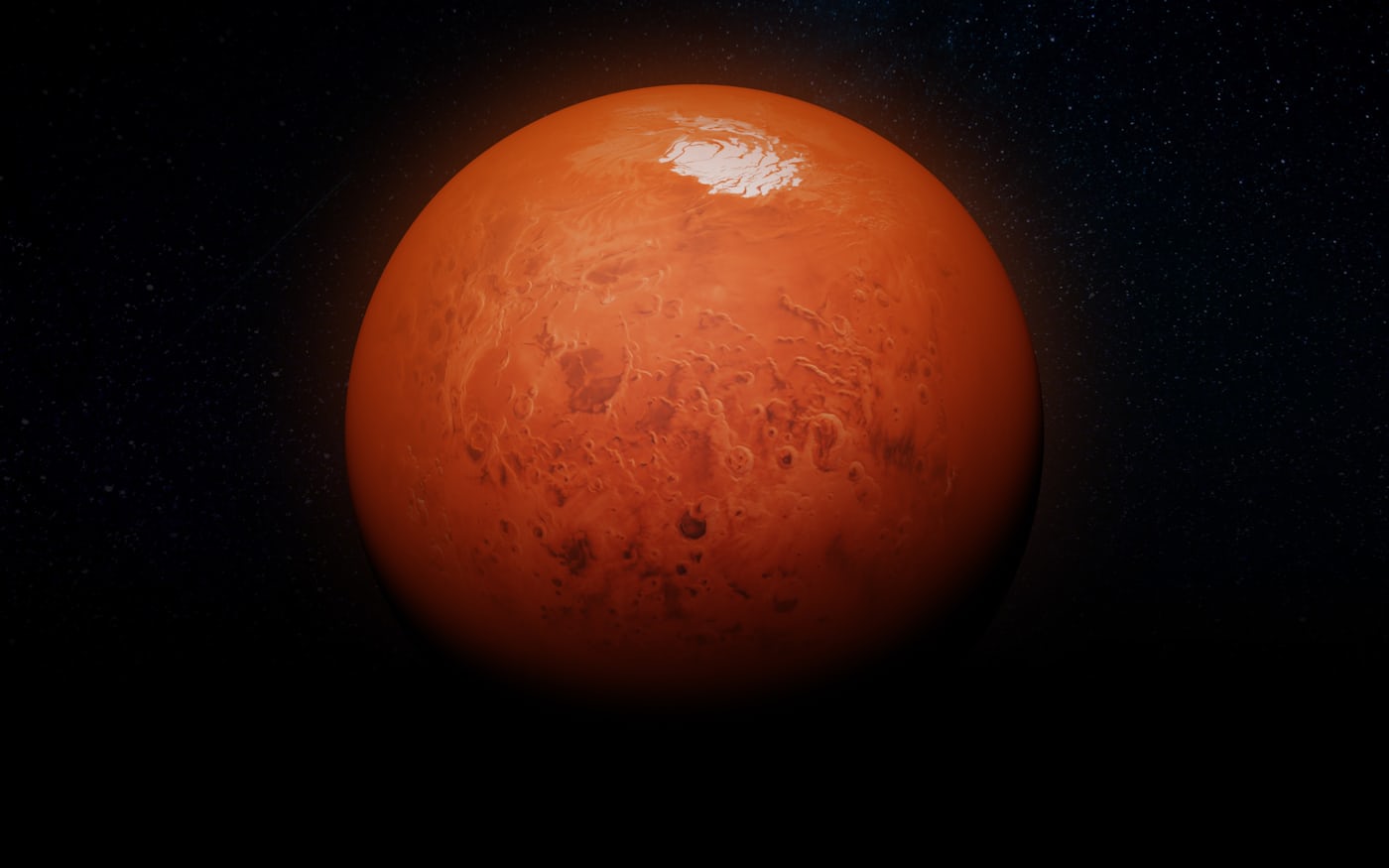

Scientists believe they may have detected electrical activity in the Martian atmosphere for the first time — a finding that could reshape our understanding of the Red Planet and its potential for life. The signals were recorded by NASA’s Perseverance rover, which has been exploring Jezero Crater since 2021 in search of ancient biological traces.
What Perseverance picked up
Using its SuperCam instrument, the rover captured subtle audio and electromagnetic signatures that researchers describe as “mini lightning.” These signals were detected during rotating plumes of dust known as dust devils and during dust storm fronts — natural Martian phenomena capable of producing friction strong enough to generate electric discharges.
A research team in France analyzed 28 hours of microphone recordings collected over two Martian years (equal to 1,374 Earth days). They found a clear correlation between dust events and electrical activity.
Why this matters
Lead researcher Dr. Baptiste Chide said the discovery has “direct implications for Martian atmospheric chemistry, climate, habitability, and future robotic and human exploration.” If confirmed, Mars would join Earth, Saturn, and Jupiter as planets with known atmospheric electrical activity.
Electric discharges on Mars could influence chemical reactions that shape the planet’s environment, possibly contributing to conditions favorable for early microbial life.
Skepticism remains
However, not all scientists are convinced. Particle physicist Dr. Daniel Pritchard wrote in Nature that while the evidence is persuasive, the lack of visual confirmation means “some doubt will inevitably remain.” He noted that the debate may continue until future missions carry more advanced instruments to capture these events on camera.
Other recent findings on Mars
Earlier this year, researchers reported unusual rock formations nicknamed “leopard spots” and “poppy seeds,” which contain minerals that may form through chemical reactions tied to ancient microbes. NASA emphasized that while natural geological processes could also produce them, they may represent some of the clearest indications of past life found so far.
Jezero Crater’s importance
Perseverance was sent to Jezero Crater because it appears to have once been a river delta capable of supporting liquid water. Though Mars is now a cold and barren desert, evidence suggests it had a thicker atmosphere and significant water billions of years ago — making it a prime location to search for ancient habitability.
The new recordings suggest Mars’ atmosphere may be more dynamic than previously believed. Even weak electrical activity could influence its chemical evolution and provide clues about early environmental conditions. For future missions — robotic or human — understanding these processes is essential. The discovery also highlights the need for improved imaging tools to confirm and expand on these findings.